Ten AI Solutions Transforming African Agriculture in 2026
Faminga's User Experience Officer ranks the AI platforms African farmers actually reach for, and argues the race will be won on integration rather than chatbots.
By JMV Mutabaruka — User Experience Officer, Faminga
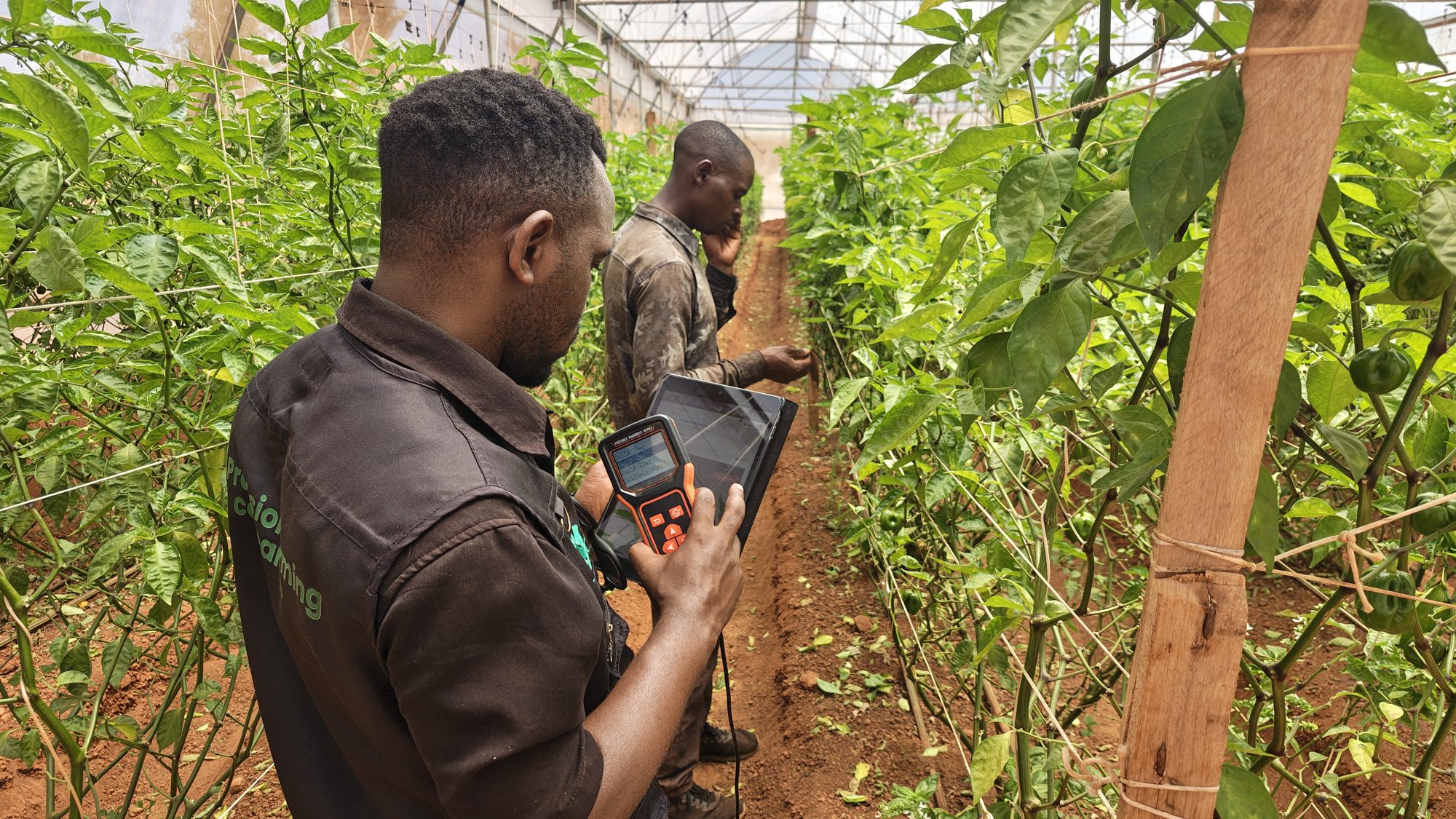
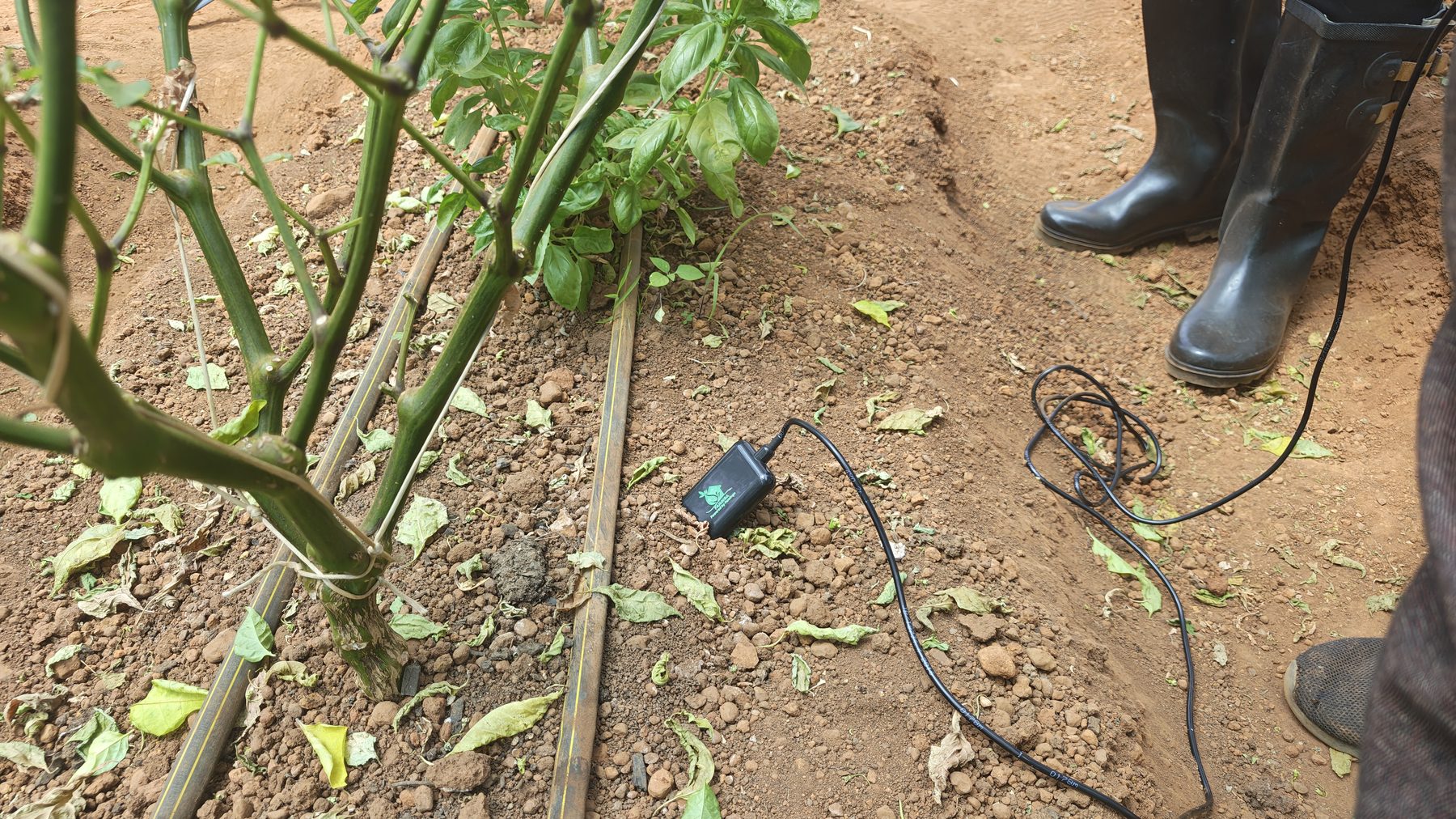
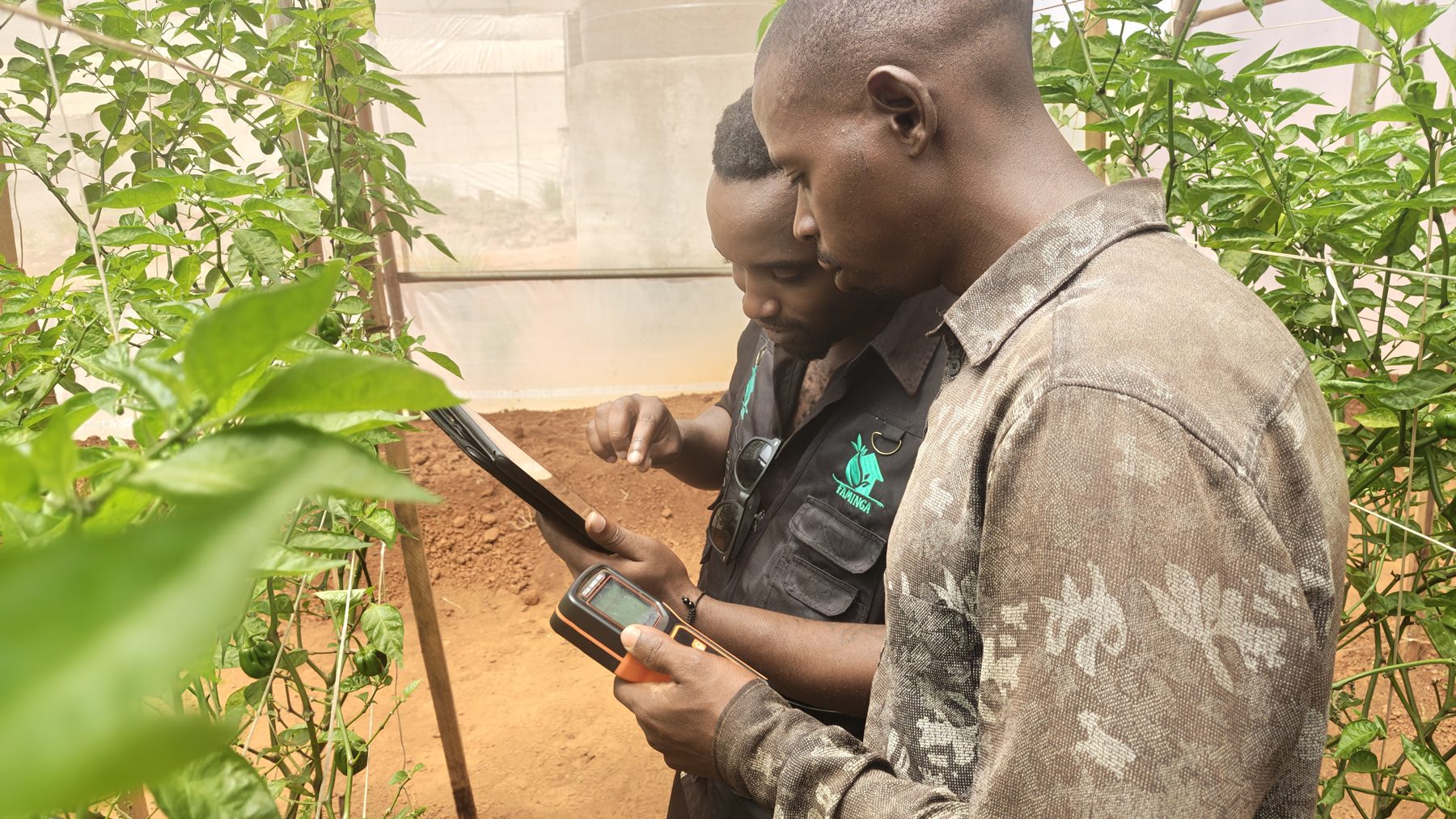
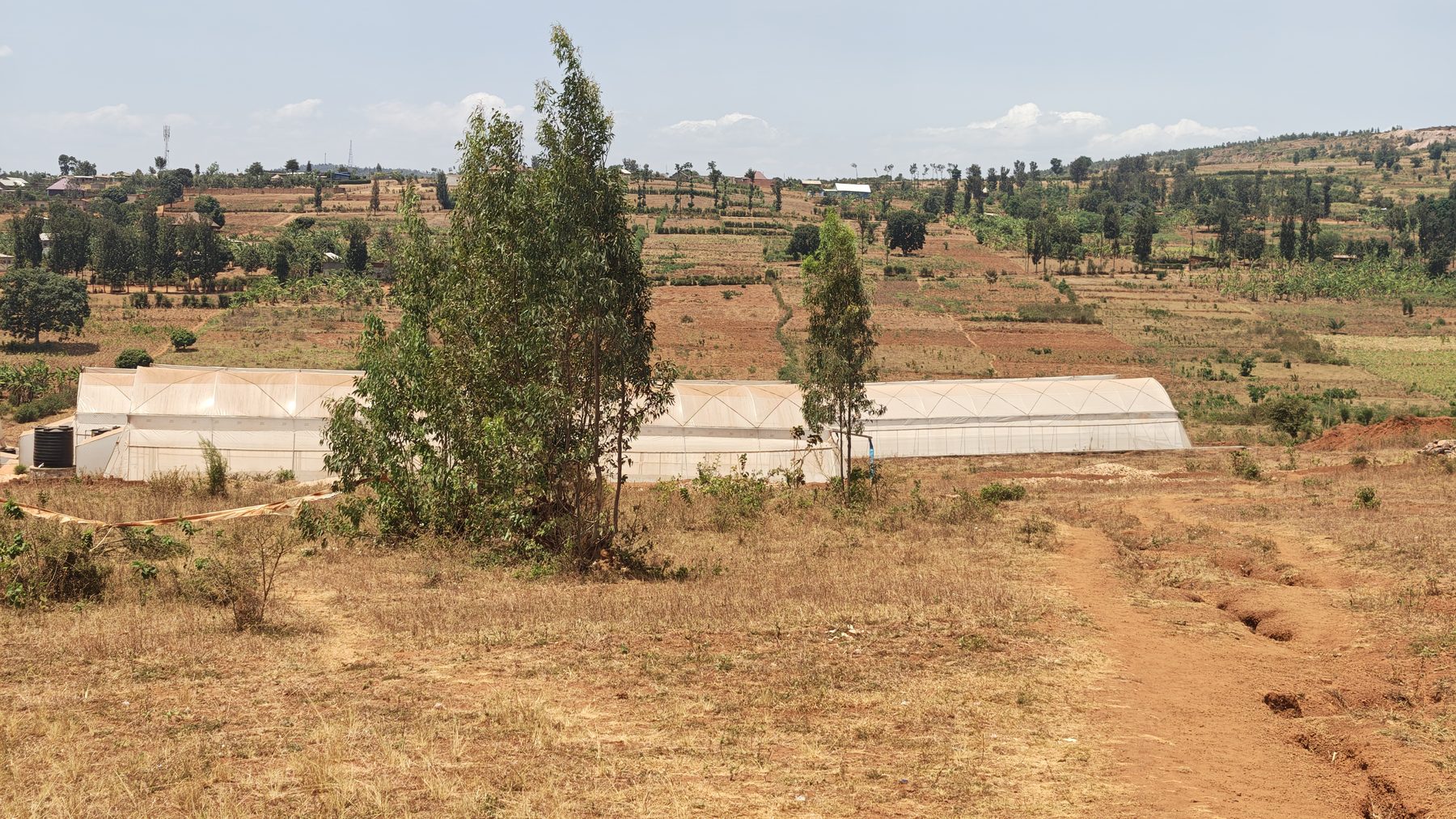
On 2 September I spent a morning in a chilli greenhouse in Bugesera, on my knees in the red soil, burying a sensor node beside a drip line while the farmer who runs the place watched and asked what the thing was actually going to tell him.
It is a fair question, and the honest answer is the whole argument of this article. Before that node went into the ground, the only way to know what was happening in that soil was for somebody to walk the row with a handheld meter and take a reading. That is accurate, and it happens when a person decides to do it. Once the node is in, the soil reports whether or not anyone comes.
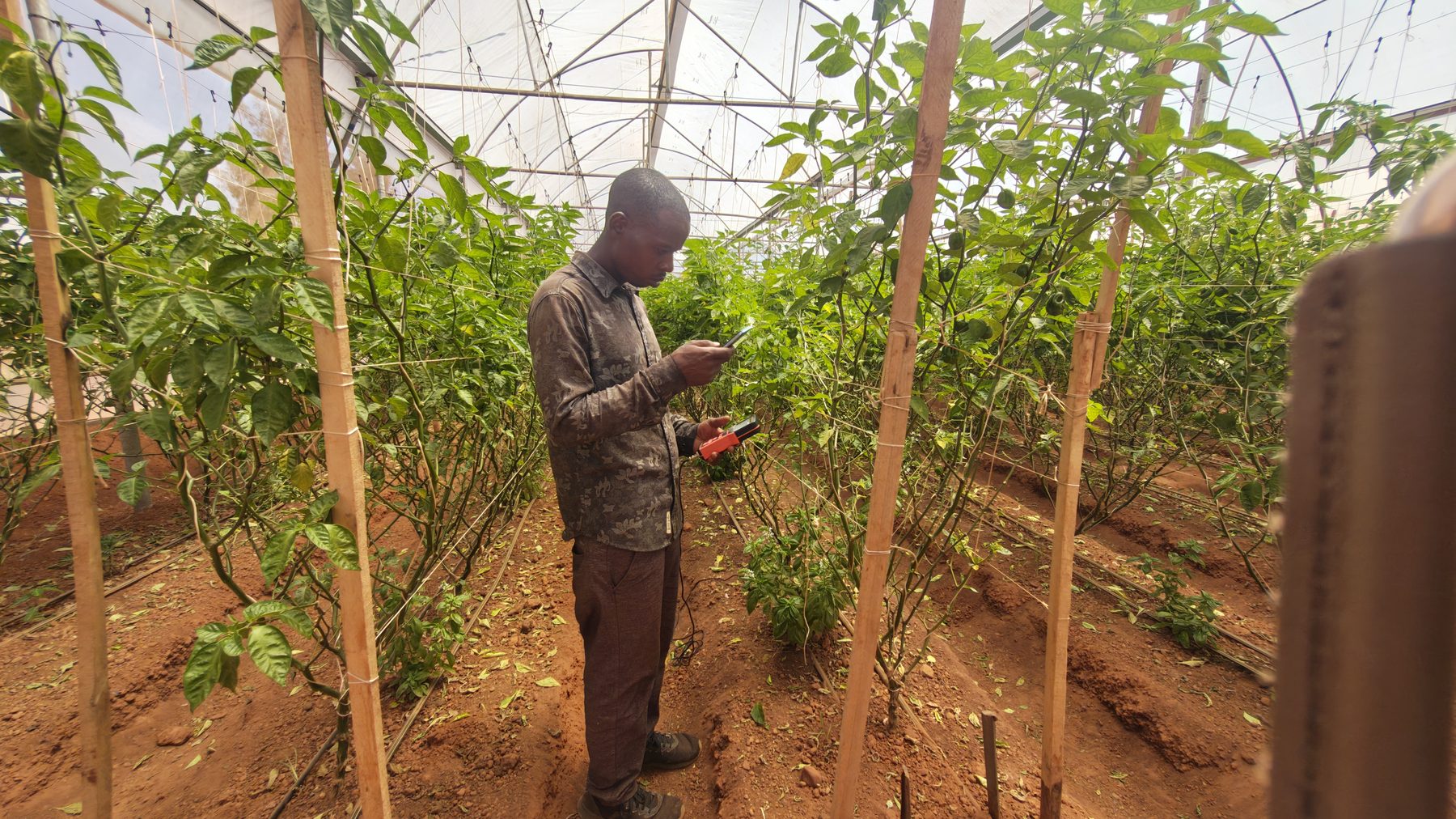
That difference is the story of agricultural AI in Africa right now. There is no shortage of information. There is a shortage of decisions that arrive before the farmer has thought to go looking.
My job at Faminga is to watch people use software under conditions software is rarely designed for — one bar of signal, a cracked screen, a language the interface does not speak, and a window of maybe four minutes between one task and the next. From that seat, the question I care about is not which company raised the most money. It is which of these systems a farmer can act on before the season moves past the crop.
With that in mind, I went through the platforms genuinely deployed across the continent, read what they publish about themselves, and ranked them on five things:
- Whether the output is a decision or merely information
- How much real field-level data the system is working from
- Whether it survives poor connectivity, low literacy and a shared handset
- How much of the farmer's problem it covers
- Evidence that it is actually deployed at scale, not piloted
A disclosure before anything else. Faminga is first on this list, and Faminga publishes this list. I have tried to earn that by stating the criteria before applying them, by saying plainly where we are behind — we are, on scale, well behind most of the companies below — and by linking every platform so you can go and judge it yourself. Read it with the appropriate scepticism.
1. Faminga
I will start with the uncomfortable part: we are not the biggest platform on this page, and it is not close. Several of the companies below reach more farmers in a month than we have onboarded in total.
What we are trying to build is a different shape. Most agricultural AI begins the moment a farmer asks a question. Ours begins before she asks, because the system is already watching the field — solar-powered sensors reading soil moisture, pH and nutrients; satellite imagery tracking vegetation stress; crop photographs; weather; and the farmer's own history of what she planted and when.
The reason that matters is not technical elegance. It is that the farmer in that Bugesera greenhouse has no question to ask until the plants show him something is wrong — and by the time a chilli plant shows water stress in its leaves, it has already set fruit it cannot fill. A system that only answers questions waits for the farmer to notice. A system watching the moisture curve can speak first.
The recommendation we are working toward is not "your soil is low in nitrogen." It is: irrigate this corner of this plot today, because moisture is falling, rain is unlikely, and the crop is at the stage where this costs you yield.
That kind of instruction is only available to a system that holds soil, satellite, weather and crop history against the same field record. Assembling that is our whole thesis, and it is also our whole risk: it means hardware, and hardware is expensive to put on a half-hectare farm. We have 7,800 farmers onboarded and a genuinely unproven cost curve beyond that. Anyone who tells you otherwise about an early-stage agritech company is selling something.
The part I am most confident about is the interface. Huguka, our advisory assistant, works by voice in Kinyarwanda, Swahili, English, French and Luganda. Text-first design quietly excludes a large share of the people we exist to serve, and voice is not a feature we added late — it is the reason some farmers use the product at all.
2. iSDA Virtual Agronomist
If I were forced to pick the platform doing the most good per shilling spent right now, it would probably be this one, and I say that as a competitor.
Virtual Agronomist runs on WhatsApp. That single decision removes most of the adoption problem: no download, no new password, no unfamiliar interface, and it works on the app people already keep open. Behind the conversation sits iSDAsoil, a soil dataset at roughly 30-metre resolution, plus farm history, weather and agronomic science, producing a nutrient plan for a specific plot. iSDA reports more than a million farmers have used it.
The design choice I admire most is invisible to the farmer. iSDA does not let the language model invent agronomy. The LLM handles the conversation; deterministic agronomic models produce the actual recommendation. In a sector where a confidently wrong fertiliser rate costs somebody a season, that separation should be the industry standard, and it currently is not.
3. Digital Green FarmerChat
FarmerChat is the most interesting experiment on this list from a user-experience point of view, because Digital Green publishes the number almost nobody publishes: activation, not registration.
Anyone can report downloads. Digital Green publishes the figure that actually decides whether a service like this is worth running — what it costs to change what a farmer does. On their own numbers, the cost per farmer to apply a new practice has fallen from
Farmers can ask by text, by voice note or by photograph, in their own language. The strategic significance is simple arithmetic: an extension officer in this region may be responsible for one or two thousand farmers. Nothing about that ratio improves without something that costs almost nothing per additional conversation.
4. Farmerline — Mergdata and Darli AI
Farmerline has been at this since 2013, which in African agritech is close to ancient. Its Mergdata platform digitises farmers, fields, transactions and supply chains, and reports reaching more than 2.3 million farmers through thousands of corporate and development partners.
Darli AI, layered on top, speaks more than 27 languages and reaches farmers through WhatsApp and through conversational IVR — an ordinary voice call. IVR is unglamorous and I think it is underrated. It is the only channel on this entire list that works on a feature phone with no data bundle, which describes a great many of the farmers everyone here claims to serve.
Farmerline also proves something the rest of us should absorb: advisory alone is not a business. Traceability, compliance and the route to the buyer are where the value gets captured, and they built toward that early.
5. PlantVillage Nuru
Nuru diagnoses crop pests and diseases from a smartphone photograph using deep learning, and it does so with no internet connection at all. The model runs on the handset.
I want to dwell on that, because it is the single most important design decision on this page. Every other system here degrades or dies when the signal does — and the signal dies exactly where the farms are. Nuru was built by people who had clearly stood in a field and watched a loading spinner spin.
Work involving Penn State, FAO and other partners put it to use on cassava mosaic disease, cassava brown streak disease and cassava green mite damage. It was doing serious computer vision for smallholders years before the current wave of attention, and it set a bar for offline-first that most of the sector still has not met.
6. Apollo Agriculture
Here is the failure mode that haunts everyone building advisory products: the advice is correct, the farmer agrees with it, and she cannot afford to act on it. A recommendation to apply fertiliser is worthless to someone with no way to buy fertiliser.
Apollo attacks that directly. Machine-learning credit models combine remote sensing, farmer profiles and third-party financial data to build a credit profile for people with no formal credit history, and inputs are delivered through a network of over a thousand agrodealers. The company operates in Kenya and Zambia and reports that farmers working with it produce around 2.5 times the Kenyan average.
Whether or not that multiple holds everywhere, the underlying move is the important one: AI used to make an invisible farmer financeable is doing more practical work than AI used to describe her soil.
7. UjuziKilimo
UjuziKilimo works on the oldest problem in farming: nobody can see the soil. Its SoilPal device does rapid soil analysis in the field, and FarmSuite turns the readings into production decisions. The company reports more than 100,000 active farmers and sells not only to them but to governments, insurers, lenders and other agritech companies.
That second audience is the interesting one. As the region moves off blanket fertiliser recommendations and toward field-specific nutrition, whoever holds credible soil data becomes infrastructure for everybody else.
8. Hello Tractor
Calling Hello Tractor the "Uber for tractors" undersells it at this point. Its connected machinery network reports supporting more than two million farmers across over 5.5 million acres, and it uses predictive analytics to anticipate demand and position equipment before the rush.
The reason it belongs on an AI list is that timing is a decision too. Our own system can tell a farmer the optimal planting window with real confidence, and it means nothing if the nearest tractor is three weeks out. Intelligence that does not connect to physical capacity is a very well-informed way of missing the season.
9. Aerobotics
Aerobotics is the outlier here, and deliberately so: it serves commercial fruit growers, not smallholders. Its TrueFruit technology analyses fruit size, colour and quality from smartphone photographs, while Drone Scan processes high-resolution aerial imagery into tree-level and zonal intelligence — moving growers from sampling a handful of trees to seeing the whole orchard.
I include it because of what it proves. African agricultural AI is not confined to development-funded smallholder tools. A company built in Cape Town is selling precision agriculture into global commercial farming, and that matters for how the rest of us are taken seriously.
10. ACRE Africa
Insurance is where African agriculture quietly breaks. Insurers cannot afford to send an assessor to thousands of half-hectare plots, so claims either become too expensive to process or too crude to be fair.
ACRE Africa's picture-based insurance uses farmers' own photographs alongside satellite data to monitor crops and verify losses, cutting monitoring costs and reducing basis risk — the gap between what an index model pays and what the farmer actually lost. It also does something subtler: it gives the farmer a role in the evidence, rather than making her the subject of a remote judgement she cannot contest.
Measurable risk is the precondition for insurance, and insurance is the precondition for a great deal of lending and investment that African agriculture currently does without.
What the ten of them add up to
Reading these back, the ranking matters less than the pattern. The sector has sorted itself into layers, and almost every company here is excellent at exactly one of them:
- Perception — seeing what is happening in the field. PlantVillage Nuru, Aerobotics.
- Advisory — interpreting it and saying something useful. iSDA, FarmerChat, Darli AI.
- Risk — deciding who can be financed or insured. Apollo, ACRE Africa.
- Operations — connecting the advice to machinery and services. Hello Tractor.
Each layer solves a real problem and leaves the farmer holding the rest. She is expected to be the integration layer — to take a disease diagnosis from one app, a fertiliser plan from another, a loan from a third, and a tractor booking from a fourth, and resolve them herself into a plan for one field.
Nobody would design it that way on purpose. It is what happens when each layer is built by a different company solving a different funder's problem.
That is the space Faminga is trying to occupy, and it is why we put ourselves first on our own list: not because we are the largest, and not because we have the strongest technology in any single layer — we do not — but because we think the fifth layer is where the next decade goes. Hold every signal against one field record, and the system stops answering questions and starts making recommendations.
What I would tell anyone building this
Agriculture is stubbornly physical, and it punishes software that forgets it. A model that is going to be useful on a real farm needs measured soil rather than assumed soil, weather at the resolution of the field rather than the district, the crop's growth stage, precise location, that farmer's own history, and a language she actually speaks. And the output has to be something she can do — with the tools, cash and time she has this week.
This is not a controversial claim, but it is an inconvenient one. AI in agriculture performs well when remote sensing, weather, soil and farm-management data are grounded in strong local evidence, and it degrades into generic or plainly wrong advice when they are not. Weak data does not produce cautious AI. It produces confident AI that is wrong.
Which is why I do not think this race gets won by whoever connects a language model to WhatsApp fastest. That is the easy part now. The hard part — sensors that survive a rainy season, soil data at field resolution, voice that works in Kinyarwanda, a recommendation that arrives before the decision rather than after it — is unglamorous, expensive and slow.
It is also the only version of this that answers the farmer who stood over me in that greenhouse and asked what the thing in his soil was going to tell him. He is owed an answer that arrives before he has to ask the question.
Figures cited here are as reported by each organisation on its own website or in its own publications, checked in September 2026. They are company-reported, not independently audited — including ours.