IoT in Agriculture in Rwanda: A First Deployment Guide
Plan a farm IoT deployment in Rwanda: choose a use case, test connectivity, check sensor readings and budget for installation, support and maintenance.
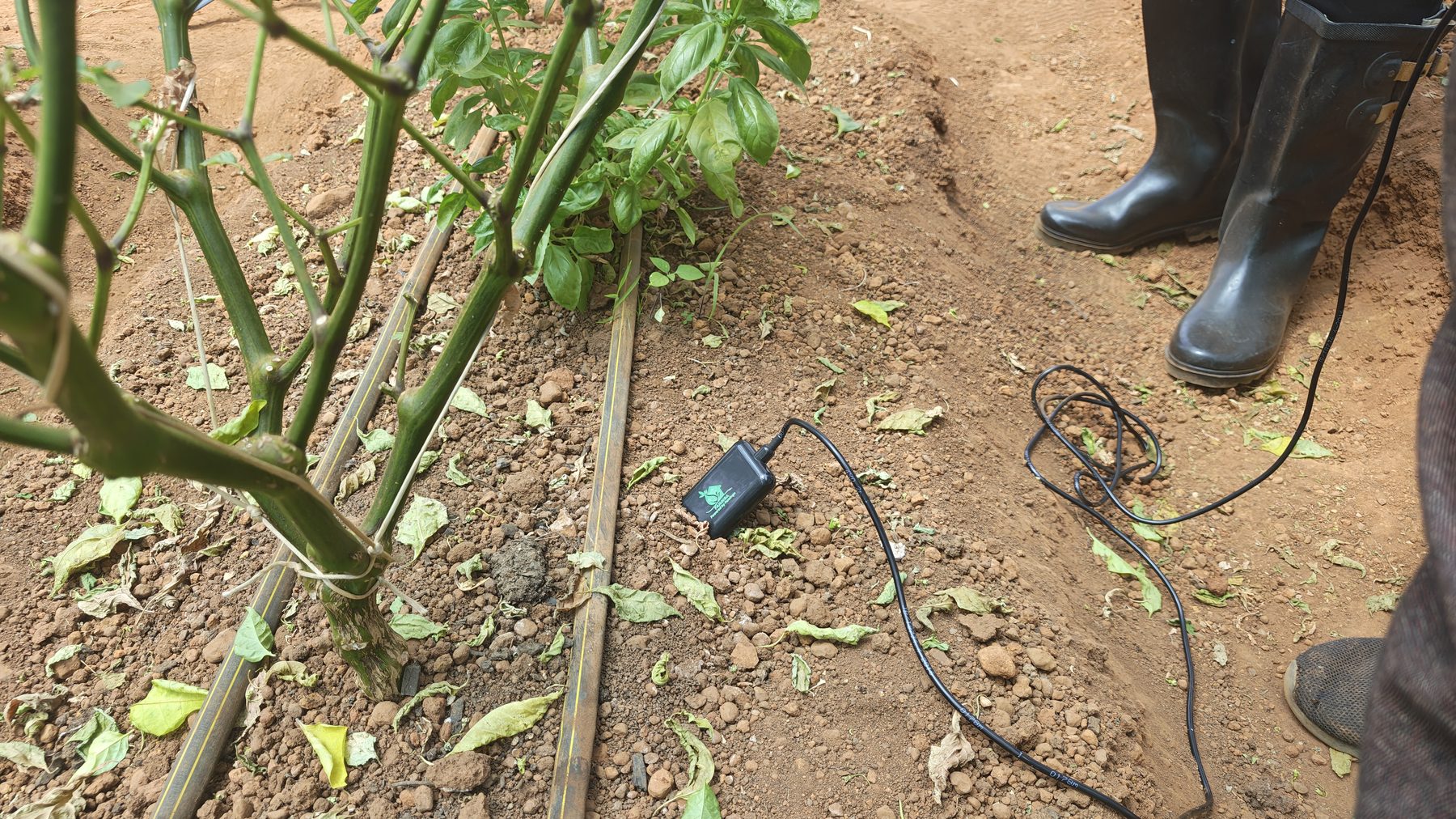
IoT in agriculture connects a field measurement to a person who can use it. For a Rwandan farm, a successful deployment needs more than a sensor: it needs a suitable installation point, dependable power and connectivity, understandable alerts and someone responsible for responding.
This guide is for a farmer, cooperative or project team preparing its first connected monitoring trial. It focuses on what to agree with an installer, how to test the complete system and how to decide whether it is worth expanding. Our soil sensor guide explains the instruments themselves in more detail.
Choose one decision to improve
Begin with a sentence such as: “We want to check whether the root zone is drying before the next irrigation,” or “We want the greenhouse manager to notice when a monitoring device stops reporting.” That sentence defines what the system must accomplish.
Do not start by ordering every available sensor. If nobody has responsibility for irrigation, a moisture alert may arrive without producing action. If water is unavailable, the immediate priority may be planning and infrastructure rather than more frequent measurements.
List the measurement, the person receiving it, the decision they can make and how they will record that decision. For a first trial, one complete and repeatable workflow is easier to evaluate than a dashboard containing many unrelated measurements.
Walk the installation site with the supplier
A quotation prepared from a map should be checked at the actual farm. Mark the proposed sensor locations, gateway position, power supply and areas where people work. Identify places exposed to machinery, standing water, animals or accidental cable damage.
On a hillside or across separated plots, do not assume that a signal tested near the office will reach every installation. Inside a greenhouse, test the intended location with the structure in normal use. Ask the installer to demonstrate that a measurement appears with the correct field name and timestamp.
For each probe, record installation depth, device identifier, location and the management area it is intended to represent. Photograph the installation. These records make it possible to investigate an odd reading without relying on the memory of the person who fitted it.
Understand the complete data route
A typical monitoring route is sensor, communication link, platform, alert and human response. Some systems use a nearby gateway; others send data through a mobile network. Ask the supplier to draw the proposed route and identify who pays for each part.
The LoRa Alliance describes agricultural uses of LoRaWAN, a radio technology used for connected devices. Published range claims describe particular conditions; they should not replace a coverage test on your land. The best connection for a site is the one that meets its reporting needs reliably at an affordable ongoing cost.
Ask what happens during an outage
Check whether a device stores readings temporarily, how long it can do so and what happens when the connection returns. The platform should distinguish a new reading from an old reading uploaded late. A green status indicator without a visible last-reading time is not enough.
Also ask what the farmer sees when a battery fails, a gateway loses power or mobile data expires. Missing measurements should produce a clear status, not a reassuring graph that silently carries forward yesterday's value.
Agree on acceptance checks before installation
Put the checks in writing while the supplier can still include the necessary work in the quotation. Use thresholds appropriate to your task, agreed with the installer and agronomist; the following list is a template, not a universal technical specification.
- Identity: each installed device reports against the right field and measurement unit.
- Freshness: the team can see when a reading was taken and when the platform received it.
- Measurement check: readings are compared with an appropriate reference using a documented method.
- Coverage: messages arrive from every intended installation point under normal operating conditions.
- Failure handling: a safely simulated outage is visible and recovery does not create misleading readings.
- Alert response: the designated person receives, understands and records a test alert.
- Handover: the farm receives maintenance instructions, support contacts and an export of its trial data.
A qualified installer should carry out any test involving powered equipment or irrigation controls. A monitoring pilot can be evaluated without immediately handing control of a pump or valve to an automated rule.
Budget for a season of operation
Ask for separate prices for hardware, installation, connectivity, platform access, training, calibration or checking, replacement parts and support visits. Establish who owns the equipment and what happens to the records if the subscription ends.
For a cooperative, clarify which costs are shared and which follow individual fields. A shared gateway does not make every member's installation and support free. Also identify the person authorised to request repairs so a damaged cable does not wait for several committees to approve a visit.
Compare the trial's total cost with the value of the decisions it supports. Include time saved on record collection only when it was actually measured. Count water savings only when water use was measured consistently; fewer pumping hours alone may not tell the full story.
A first-month deployment plan
Before installation: define the baseline
Keep a short record of the current workflow: inspection frequency, irrigation records, time spent collecting observations and the problems staff encounter. Choose a small set of representative locations and agree who will maintain the equipment.
During installation: test the whole journey
Follow a real reading from the device into the platform, then through a test alert to the responsible person. Ask that person to explain the alert in their own words. Complete the handover while the installer is still present.
During routine use: record exceptions
Keep a simple log of missing readings, unclear alerts, support requests and decisions made. A troublesome sensor should remain visible in the review instead of disappearing from the trial report. An exception log often reveals support costs that a successful launch-day demonstration cannot show.
At review: decide what to change
Separate technical reliability from agricultural outcomes. A month may show whether data arrives and alerts are understandable; it usually cannot establish a season's yield benefit. Expand only when the workflow is dependable and the next set of fields has a clear reason to join.
Connecting the pilot to Faminga
Faminga's approach connects soil monitoring with field records and farm decisions. For a proposed deployment, ask the team to confirm the exact supported devices, installation plan, reporting intervals and service arrangements. A platform description is not a substitute for a site-specific quotation and acceptance test.
Continue with our smart irrigation guide if water management is the first use case, or our precision agriculture guide for Rwanda if you are combining sensor observations with weather, crop records and satellite data.
Published by Faminga. Prepared with AI-assisted research and drafting; sources checked on 3 October 2026. The deployment checklist is editorial guidance, not a device certification, installation warranty or measured savings claim.